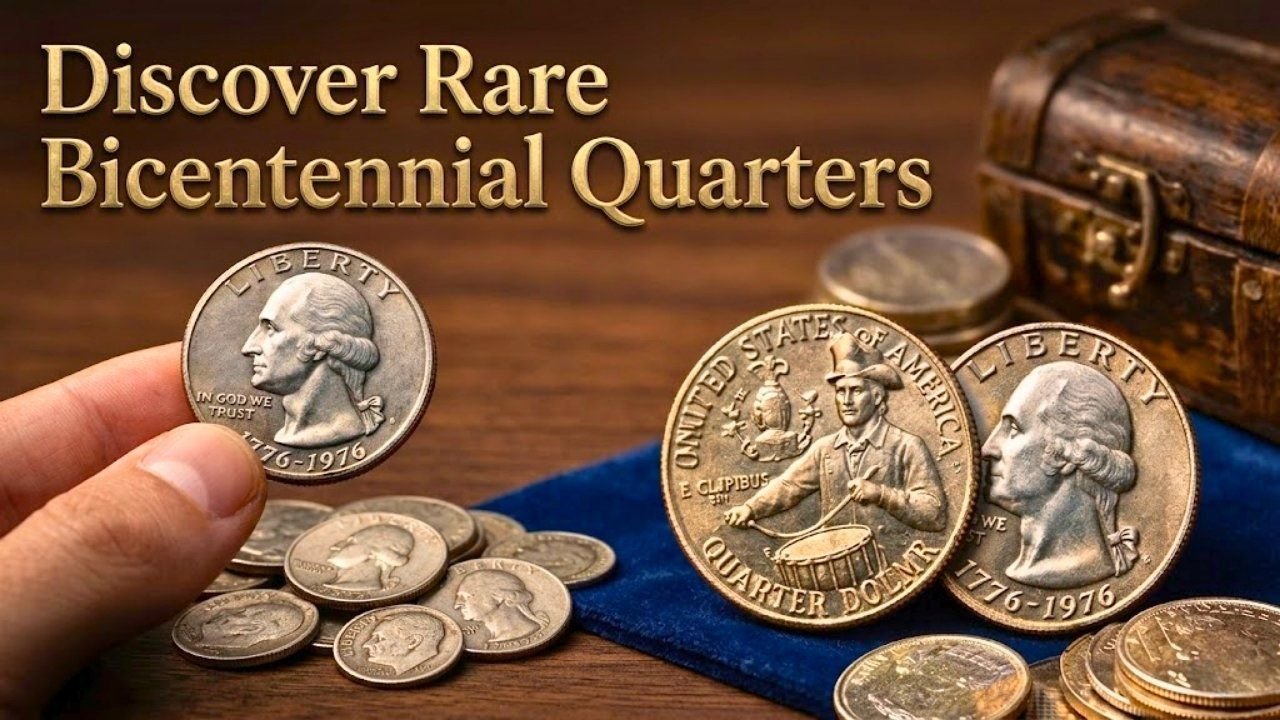
The 1776–1976 Bicentennial Quarter has long been a staple of American coinage, but recent market activity has renewed interest in these iconic coins. While most circulate at face value, certain varieties and rare minting errors now command impressive sums among collectors.
The renewed attention is fueled in part by America’s 250th anniversary celebrations. Commemorative issues in 2026 have driven collectors back to the original 1976 series, highlighting both historical significance and the potential for hidden value in everyday change.
For collectors and investors, understanding which Bicentennial quarters stand out can mean the difference between a common coin and a collectible worth thousands.
Understanding the Bicentennial Quarter
Issued to celebrate the nation’s 200th anniversary, the Bicentennial Quarter features the dual date “1776–1976” and a colonial drummer on the reverse. Millions were minted for circulation, making standard coins abundant. However, special proof strikes, silver editions, and minting anomalies create pockets of rarity that continue to intrigue collectors.
Silver Collector Editions
The San Francisco Mint produced a limited number of 40% silver Bicentennial quarters for collectors. These can be identified by the “S” mint mark and a solid silver edge without the copper layer typical of clad coins. Depending on condition and strike quality, high-grade silver proofs and uncirculated examples can fetch anywhere from $20 up to $19,000.
The Doubled Die Obverse
One of the most sought-after error varieties is the 1976-D Doubled Die Obverse, which shows doubling in inscriptions such as “LIBERTY” and “IN GOD WE TRUST.” Coins in pristine condition often reach $3,000 to $8,000, making them a key target for error hunters.
Struck-Through and Extreme Errors
Coins struck through debris, like the “Struck Through Cloth” error, display textured surfaces resembling fabric. These have sold near $1,000, proving that minor minting mishaps can create unexpected value.
Other extreme anomalies, such as quarters struck on planchets intended for dimes or transitional silver planchets, are highly prized. Verified double-denomination errors can command $12,000 or more, reflecting their rarity and historical curiosity.
2026 Bicentennial Quarter Value Guide
| Coin Type | Key Feature | Estimated 2026 Value |
|---|---|---|
| Standard P/D Mint (circulated) | Regular clad | $0.25 |
| Standard P/D Mint (MS67+) | High-grade circulated | $50 – $2,500 |
| 40% Silver S-Mint | Proof or uncirculated | $10 – $19,000 |
| Doubled Die D-Mint | High-grade | $3,000+ |
| Struck on Dime Planchet | Verified error | $12,000+ |
This table provides a quick reference for collectors assessing potential value in their collections or purchases.
Collector Tips for Maximizing Value
- Avoid cleaning coins: Polishing can significantly reduce value.
- Use magnification: Many errors are visible only under close inspection.
- Check edges and mint marks: Silver editions lack the copper stripe of standard clad coins, and small mint marks can indicate rarity.
- Seek professional grading: Certification boosts credibility and resale potential.
Why the Bicentennial Quarter Remains Relevant
Despite headlines suggesting extreme values, most Bicentennial quarters remain modestly priced. Yet, rare varieties, silver editions, and verified minting errors continue to attract attention. With renewed collector enthusiasm in 2026, these coins highlight how everyday currency can hold historical and financial significance.
For collectors, patience, knowledge, and careful inspection remain essential. Even common coins could conceal surprises waiting to be discovered in jars, drawers, or circulation, offering both a link to history and the potential for real-world value.