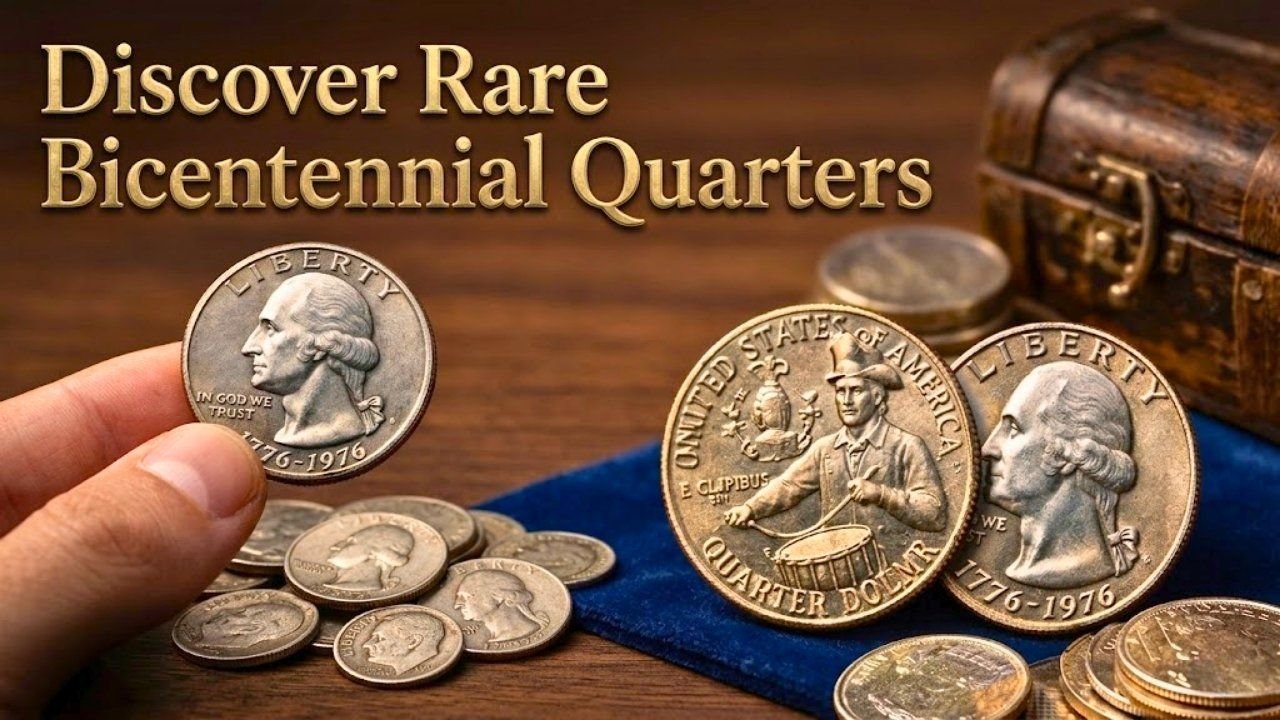
In recent months, headlines have highlighted staggering sales of Bicentennial quarters, with some reports claiming a 1776–1976 coin featuring the iconic “Drummer Boy” design sold for $750,000. While these figures capture attention, the reality is more nuanced. Most Bicentennial quarters remain common and trade at face value, yet rare varieties and minting errors can generate remarkable interest among collectors.
Understanding the Bicentennial Quarter
Issued to commemorate America’s 200th anniversary, the Bicentennial Quarter features the dual date “1776–1976” and a colonial drummer on the reverse. Millions were minted, ensuring that standard quarters are widespread. However, limited special editions and unusual errors create pockets of scarcity, driving significant collector demand.

Collectors often focus on four main categories that affect value: composition, minting errors, struck-through anomalies, and extreme minting irregularities. Recognizing these can make the difference between a coin worth mere cents and one valued in the thousands.
The Silver Editions
One of the most valuable distinctions lies in composition. While the majority of Bicentennial quarters are copper-nickel clad, the San Francisco Mint produced 40% silver versions for collectors. These silver coins are easily identified by the “S” mint mark near Washington’s ponytail and a solid silver edge without the copper stripe present on clad coins.
High-grade silver proofs and uncirculated examples can range in value from $20 to nearly $19,000, depending on condition and strike quality. For collectors, spotting these silver issues in circulation or estate collections can yield substantial rewards.
The Doubled Die Obverse

Among the most sought-after varieties is the 1976-D Doubled Die Obverse. This error occurred when the die was misaligned during production, producing a noticeable doubling effect on inscriptions such as “LIBERTY” and “IN GOD WE TRUST.”
Doubled die coins are highly prized, with values ranging from $800 to over $8,000 for pristine specimens. Detection requires careful inspection under magnification, making patience and a trained eye essential for prospective buyers and sellers.
Struck-Through Errors
Another fascinating rarity is the “Struck Through Cloth” error. Occasionally, debris such as cloth became lodged between the die and planchet during minting, leaving the coin with a textured surface resembling fabric. These anomalies are rare and unusual, sometimes fetching close to $1,000 at auction. They serve as a reminder that even minor minting mishaps can transform ordinary coins into prized collectibles.
Transitional and Double Denomination Errors
Extreme minting anomalies yield the highest values in the Bicentennial quarter market. Transitional errors, where a quarter is mistakenly struck on a 90% silver planchet intended for pre-1965 coins, are rumored but rarely verified. Even more extraordinary are double denomination errors, where a quarter design is struck on a dime planchet. Verified examples have sold for $12,000 or more, making them the crown jewels for error coin enthusiasts.
Quick-Reference Value Guide (2026 Market)
| Coin Type | Typical Value |
|---|---|
| Standard P or D Mint (circulated) | $0.25 |
| Standard P or D Mint (MS67+) | $50–$2,500 |
| 40% Silver (S-Mint, proof/uncirculated) | $10–$19,000 |
| Struck on a Dime Planchet | $12,000+ |
| Doubled Die (D-Mint, high grade) | $3,000+ |
This guide highlights the stark contrast between ordinary quarters and rare varieties, emphasizing the potential for substantial returns in the right conditions.
The 2026 Collector Craze
The U.S. Semiquincentennial celebrations have reignited interest in the Bicentennial series. With the release of new 2026 commemorative quarters featuring Revolutionary-era designs, collectors are revisiting the original 1976 issues. This surge in interest has doubled market activity, making even common Bicentennial quarters more desirable in high grades.
Collectors and investors alike are paying attention to coins in pristine condition, silver issues, and any with verified errors. Awareness and timely action can transform a modest collection into a highly valuable portfolio.
Tips for Collectors
- Avoid cleaning coins: Even gentle cleaning can destroy numismatic value.
- Use magnification: Errors like doubled dies and subtle strike variations are best detected under a magnifying lens.
- Check the edge: Silver issues lack the copper stripe present on clad coins.
- Seek professional grading: Certified coins have verified authenticity and can command higher resale prices.
- Stay informed: Monitor auction results and collector forums to gauge current market trends.
Conclusion
While stories of $750,000 Bicentennial quarters capture headlines, the reality is that most examples are still worth face value. However, with knowledge, patience, and a keen eye, rare varieties, silver editions, and minting anomalies can command impressive sums. In 2026, with America celebrating its 250th anniversary, the Bicentennial quarter has reclaimed its status as one of the most exciting coins in U.S. history. For collectors, the key is vigilance and informed exploration—because hidden treasures may still be circulating in your pocket change.