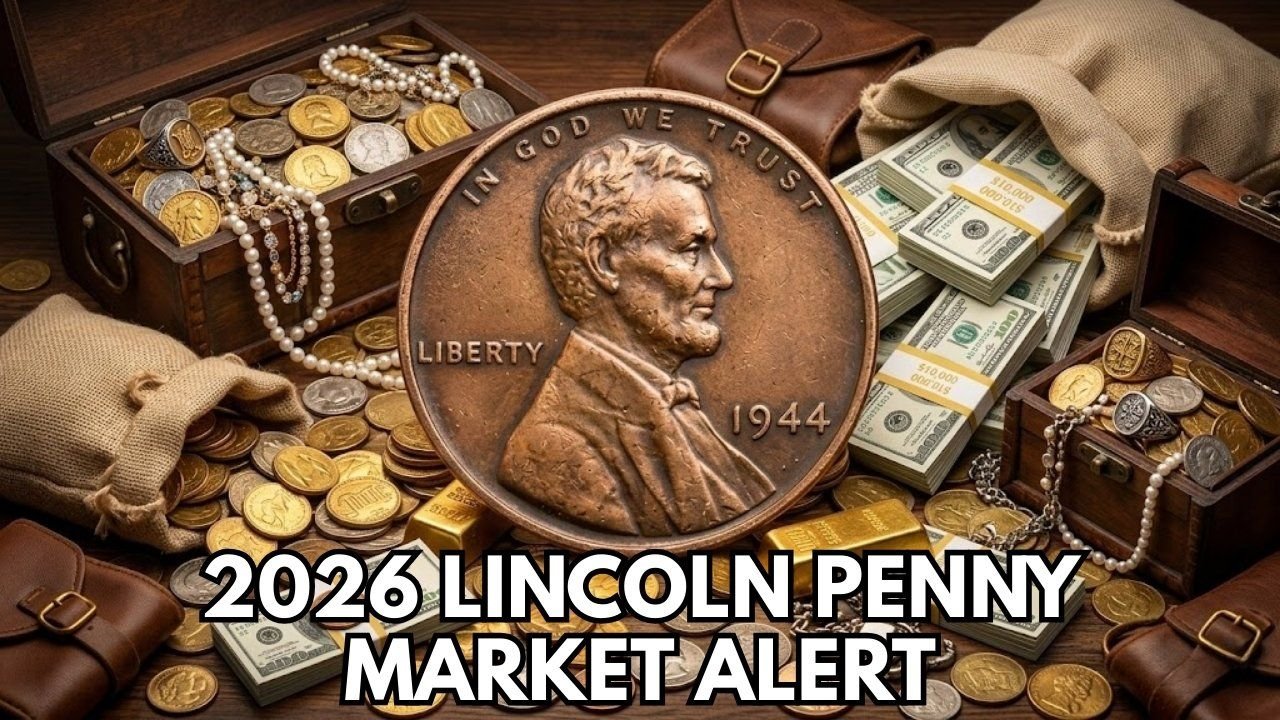
With America celebrating its 250th anniversary in 2026, the numismatic world is buzzing like never before. The Lincoln Wheat Penny, long a cornerstone of U.S. coinage, has been thrust back into the spotlight. Collectors and investors are eagerly seeking these coins, particularly as the U.S. Mint officially ended circulation strikes for the penny in late 2025. The newly released 2026 commemorative cent, featuring the dual date 1776–2026 and a Liberty Bell privy mark, is exclusively produced for collectors, amplifying demand for older Lincoln cents.
The 1943-S Bronze Cent: A Million-Dollar Marvel
Among the most coveted coins is the 1943-S Bronze Lincoln Cent. Wartime copper shortages had shifted production to steel planchets, yet a handful of bronze coins were mistakenly struck. Only seven confirmed examples exist, making this one of the rarest coins in U.S. history. Recent auctions have seen these wrong-planchet errors approach or exceed the million-dollar mark, cementing their status as the “Holy Grail” of Wheat Pennies.
This coin’s allure lies not only in its scarcity but also in the story it tells: a tangible link to wartime America, a fleeting minting anomaly that has become the centerpiece of countless collections.
Why 2026 Is the Year of the Penny
The Circulating Collectible Coin Redesign Act has transformed 2026 into a landmark year for collectors. With the Lincoln penny no longer entering everyday commerce, older Wheat Pennies are being hoarded at unprecedented levels. Their “last of their kind” status has sparked both casual collecting and serious investment.
Even common Wheat Pennies from the 1940s and 1950s are experiencing noticeable value increases. Bulk lots are appreciating by 10–15%, demonstrating the rising market appetite for coins that were once considered pocket change.
Top 5 Wheat Pennies to Watch in 2026
While the 1943 Bronze Cent remains virtually unattainable for most, several other varieties are commanding attention in today’s market:
1909-S VDB
The first-year issue featuring Victor David Brenner’s initials prominently on the reverse. Scarce and historically significant, it continues to be a collector favorite. Estimated value: $2,500+ in top grades.
1914-D
Denver-minted and rare in high grades, this penny is heavily sought after for its scarcity and historical appeal. Estimated value: $1,200–$5,000.
1922 No D
A Denver die error resulted in coins without the “D” mint mark. Collectors prize the “Strong Reverse” variety for its uniqueness. Estimated value: $800–$3,000.
1944 Steel
An unusual error where steel planchets were mistakenly used after production returned to copper post-war. These coins stand out for their striking appearance and rarity. Estimated value: $75,000+.
1955 Doubled Die
Famous for the dramatic doubling of inscriptions, this coin is instantly recognizable and widely celebrated in numismatic circles. Estimated value: $1,500–$15,000 depending on condition.
How to Spot Hidden Treasures
Even in circulation or bulk collections, collectors can identify potential rarities with simple techniques:
- Magnet Test: A 1943 penny that sticks to a magnet is steel and common. If it does not, it could be the rare bronze error.
- Check for V.D.B.: On 1909 pennies, look for the designer’s initials on the reverse. When paired with an “S” mint mark, these coins can be extremely valuable.
- Look for Missing Mint Marks: The 1922 “No D” penny is a major find. Absence of a mint mark on a 1922 date coin signals potential worth, and professional grading is essential.
The Collector’s Advantage in 2026
The Semiquincentennial celebrations have created a perfect storm for coin collecting. Demand for tangible pieces of history is at an all-time high, and Lincoln Wheat Pennies are riding this wave. Collectors and investors alike are focusing on coins with verified provenance, high-grade condition, and unusual minting features.
For seasoned numismatists, this year offers an opportunity to enhance collections with high-value pieces. For newcomers, even modest finds like a 1955 Doubled Die or a 1922 No D can provide a gateway into serious collecting, with long-term value potential.
From Pocket Change to Investment
Lincoln Wheat Pennies demonstrate how even the smallest denomination can hold extraordinary worth. Coins like the 1943-S Bronze Cent illustrate the extreme end of the market, while more attainable varieties still offer meaningful investment potential. In 2026, with the penny’s circulation era officially concluded, collectors are discovering that every coin has a story—and some may also have a remarkable price tag.
Conclusion
The Lincoln Wheat Penny is far more than a relic of the past; it is a living piece of American history whose value continues to rise. With the end of everyday circulation, coupled with the Semiquincentennial celebrations, 2026 has earned its title as the “Year of the Penny.” From million-dollar rarities to accessible doubled dies, Lincoln Wheat Pennies are proving that even humble copper coins can become extraordinary treasures for those with the knowledge and foresight to recognize their worth.