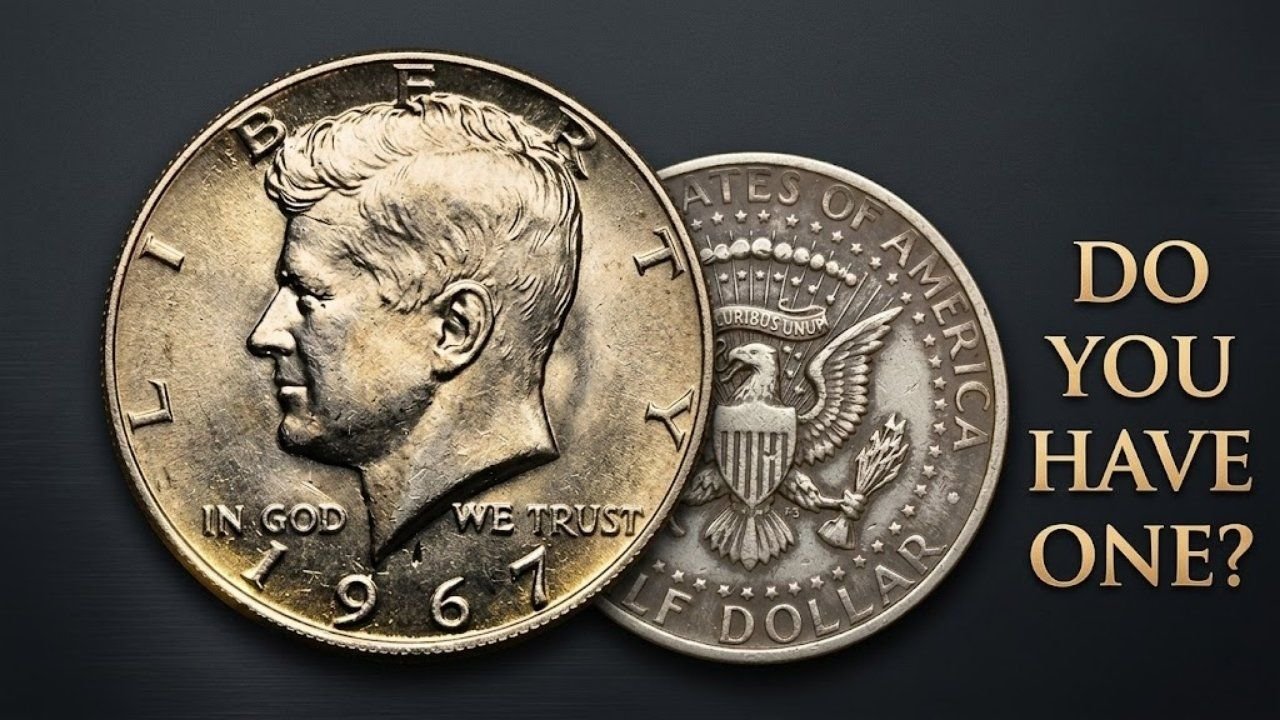
Many assume silver vanished from U.S. coinage after 1964, but the Kennedy Half Dollar quietly retained silver until 1970. In 2026, with silver prices fluctuating and collectors hunting hidden gems, the 1967 Kennedy Half Dollar has emerged as a sleeper collectible. What was once everyday change is now being recognized for its potential investment value.
Collectors and investors are increasingly examining coins from this era. While most remain in circulation, high-grade specimens—particularly those with special finishes or rare errors—can command impressive sums, blending history, artistry, and tangible financial worth.
The Hidden Silver Content
Unlike dimes and quarters of the same period, the 1967 Kennedy Half Dollar contains 40% silver. These silver-clad coins were often overlooked, leaving many still tucked away in drawers, jars, and old collections. Each coin carries an Actual Silver Weight (ASW) of 0.1479 troy ounces, translating to a melt value of roughly $4.80–$5.10 at current silver prices.
| Feature | Details |
|---|---|
| Composition | 40% silver, 60% copper |
| ASW | 0.1479 troy oz |
| 2026 Melt Value | $4.80–$5.10 |
Value Tiers in 2026
Circulated Coins – The Daily Driver
Coins showing scratches, wear, or general circulation are valued primarily for their silver content. Most of these pieces trade between $5 and $15, making them popular with collectors who “stack” silver as a hedge against inflation.
Special Mint Sets – Collector Favorites
In 1967, the Mint issued Special Mint Sets (SMS) instead of Proof Sets. These coins feature sharper strikes and satiny finishes, offering higher appeal to collectors. Depending on grade, SMS coins are currently valued between $20 and $500, with MS67 examples fetching around $235 and MS68 coins exceeding $500.
Ultra Cameo – The Retirement Maker
A rare subset of SMS coins displays Ultra Cameo contrast, featuring frosted portraits against mirror-like fields. These coins are highly sought after, with MS68 Ultra Cameo specimens commanding $5,000 to over $14,000 at auction in 2026.
Error Varieties That Boost Value
Certain minting anomalies can dramatically increase a coin’s market price:
| Error Type | Description | Estimated Value |
|---|---|---|
| No FG | Missing designer initials on the reverse | $50–$200+ |
| Double Die Obverse | Doubling on “IN GOD WE TRUST” or the date | Up to $500 |
| Quarter Planchet Strike | Coin struck on a quarter planchet | $2,800+ |
Even circulated coins with these errors can become significant finds, turning ordinary pieces into valuable collectibles.
Handling and Authentication
Preserving a coin’s condition is critical. Never clean coins, as even light polishing can reduce value dramatically. High-resolution apps and digital tools can provide initial grading estimates, but professional authentication through PCGS or NGC is essential to unlock true market potential.
Silver coins can also be preliminarily identified by sound—a high-pitched, bell-like ring when tapped distinguishes them from clad coins.
Why the 1967 Kennedy Half Dollar Matters
This half dollar exemplifies how overlooked coins can hold substantial value. While most circulated examples are modestly priced, high-grade or error coins can reach life-changing figures. Beyond metal content, these coins capture a piece of U.S. history, blending design, scarcity, and collector demand.
In 2026, the Kennedy Half Dollar has stepped into the spotlight, proving that careful observation and knowledge can turn a forgotten coin into a hidden fortune. Whether discovered in a family collection or a jar of change, it remains one of the most intriguing coins for both enthusiasts and investors.